Fishing Tournaments in Costa Rica: Los Sueños and Quepos Season Guide
Costa Rica's Central Pacific has become one of the busiest competitive billfish coastline in the world. Between January and April, two marinas roughly 40 miles apart — Los Sueños in Playa Herradura and Marina Pez Vela in Quepos — host a run of tournaments that draws teams from more than a dozen countries, pays out millions of dollars, and releases thousands of billfish in a matter of weeks.
If you have ever watched the leaderboards during Triple Crown week and wondered how a visiting angler actually gets into one of these events, this guide covers it: which tournaments run when, how each one is structured, which are open to outside teams, and what it takes to fish one from a charter boat rather than a private program.
Why the Central Pacific Hosts So Many Tournaments
Three things put this stretch of coast at the center of the tournament calendar.
The fishery. Sailfish concentrate off the Central Pacific in extraordinary numbers from December through April! Its not just about sailfish either. With blue marlin, black marlin, striped marlin, yellowfin tuna, and dorado also found in these same waters, the action is nonstop. Release numbers tell the story better than any description: The 2026 Los Suenos Triple Crown saw 6,395 bill fish released over 9 days and 40 boats. That is 159 billfish per boat. The 2026 Pelagic Rockstar produced 2,338 billfish releases across a 117-boat fleet in two days of fishing, and the 2026 Offshore World Championship averaged roughly 30 releases per boat over three days.
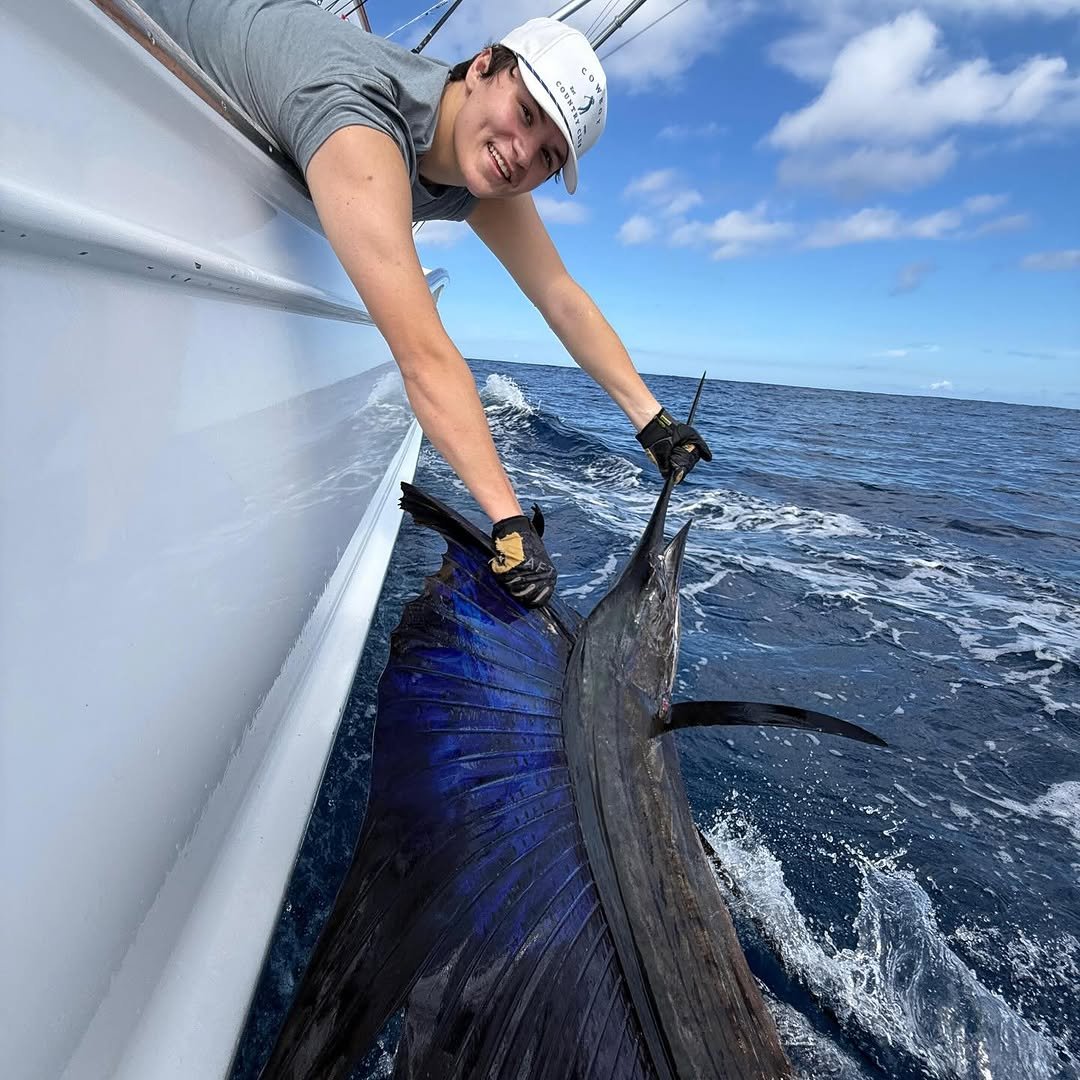
Costa Rica Sailfish
Short runs. Productive water sits close. Boats are frequently into fish inside 20 to 30 miles, which means more lines-in time and less fuel burned getting there. In a points-per-day format, that matters.
Infrastructure. Both host marinas are full-service, deep-water facilities with fuel, haul-out capability, provisioning, restaurants, and slip capacity for large visiting fleets. A team can ship a boat in, run a season, and ship out without improvising anything.
Add reliable dry-season weather and a two-hour transfer from San José International Airport, and the region works as well for a traveling angler as it does for a full-time program.
The 2027 Tournament Calendar at a Glance
| Event | Dates | Host Marina | Format |
|---|---|---|---|
| Dorado Derby | November 14, 2026 | Marina Pez Vela, Quepos | One-day open event, dorado |
| Dorado Derby Dos | November 21, 2026 | Marina Pez Vela, Quepos | One-day open event, dorado |
| Marlin Invitational | December 10–12, 2026 | Marina Pez Vela, Quepos | Invitational, marlin focus |
| Pelagic Rockstar Offshore Tournament | January 14–17, 2027 | Marina Pez Vela, Quepos | Open team event, two fishing days |
| Los Sueños Triple Crown, Leg 1 | January 18–23, 2027 | Los Sueños, Herradura | Ladies Only Tuesday, Triple Crown Thursday–Saturday. Slip holders only |
| Rooster Rodeo | January 30, 2027 | Marina Pez Vela, Quepos | One-day inshore event, roosterfish |
| Flor de Caña Signature Open | February 5–7, 2027 | Marina Pez Vela, Quepos | Open team event |
| Pescadora Billfish Championship | February 18–20, 2027 | Marina Pez Vela, Quepos | All-women, two fishing days |
| Los Sueños Triple Crown, Leg 2 | February 22–27, 2027 | Los Sueños, Herradura | Ladies Only Tuesday, Triple Crown Thursday–Saturday. Slip holders only |
| Sailfish Slam | March 6, 2027 | Marina Pez Vela, Quepos | One-day open event, sailfish |
| IGFA Open | March 11–13, 2027 | Marina Pez Vela, Quepos | Open team event, IGFA rules |
| Los Sueños Triple Crown, Leg 3 | March 29 – April 3, 2027 | Los Sueños, Herradura | Ladies Only Tuesday, Triple Crown Thursday–Saturday. Slip holders only |
| Bisbee's Costa Rica Offshore | April 6–10, 2027 | Marina Pez Vela, Quepos | Open team event, three fishing days |
| Offshore World Championship | April 11–15, 2027 | Marina Pez Vela, Quepos | Champions and Challengers, three fishing days |
| Tuna Thunder | June 26, 2027 | Marina Pez Vela, Quepos | One-day open event, yellowfin tuna |
Marina Pez Vela also runs a set of shorter, lower-commitment events through the same window — the Rooster Rodeo in early February, the Sailfish Slam in early March, the Club Amateur de Pesca International Sailfish and Marlin Tournament in late February, and the IGFA Open in mid-March. Dates for these shift year to year and are published on the marina's tournament page.
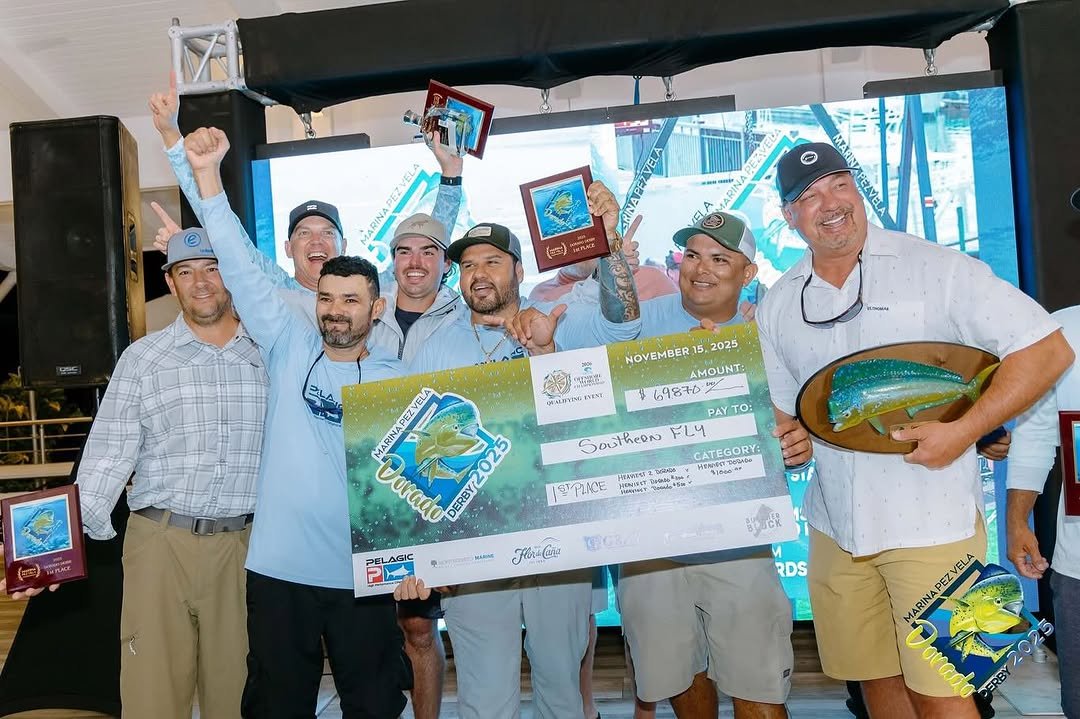
Southern Fly Team at the Dorado Derby
Confirm all dates with the organizer before booking travel.
Los Sueños: The Triple Crown
The Los Sueños Triple Crown is the most prestigious billfish series in Costa Rica and one of the most respected in the world.
Format. Three separate legs in January, February, and March. Each leg is three consecutive fishing days, no lay days, lines in at 8:00 a.m. and out at 4:00 p.m. Trophies go to the top three boats in each leg, and cumulative performance across all three decides the series winner.
Scoring. Sailfish are worth 100 points. Any marlin is worth 500. Fish must be released to score, which puts a heavy premium on converting marlin bites — a single blue can reorder a leaderboard built on sailfish.
Rules that shape the fishing. Anglers must hook their own fish. There is no passing the rod from a mate, which is unusual at this level and rewards anglers who have put in the reps. Fishing is confined to a 50-mile radius of Herradura Bay, which keeps faster boats from simply running away from the fleet. An independent observer rides on every boat, checks in at the marina office before 5:45 a.m., and verifies every release.
Eligibility. This is the part most visiting anglers do not expect. The Triple Crown is open only to boats holding a slip at Safe Harbor Los Sueños. You cannot enter with a boat that is not moored in Los Suenos. Getting on the leaderboard means fishing aboard a vessel already based in the marina — which is exactly how most visiting anglers do it, by chartering with a resident fleet.
Ladies Only. Each leg is preceded by a one-day Ladies Only tournament, typically the Tuesday before lines-in. It runs its own leaderboard and awards, and it has become one of the highlights of the Triple Crown each year.
What the week is actually like. Registration and a mandatory captains' meeting at the Beach Club on Wednesday, followed by a welcome dinner. Boats leave as early as 6:00 a.m. once observers are aboard. Scorecards close at 7:00 p.m. each night. Saturday finishes with an awards dinner and ceremony. The fleet averages around 40 boats per leg, which keeps the event social rather than industrial — you will know most of the crews by day three.
Maverick Costa Rica Sportfish Charters is a Silver sponsor of the Triple Crown and we have multiple boats that fish series every season out of our home marina.
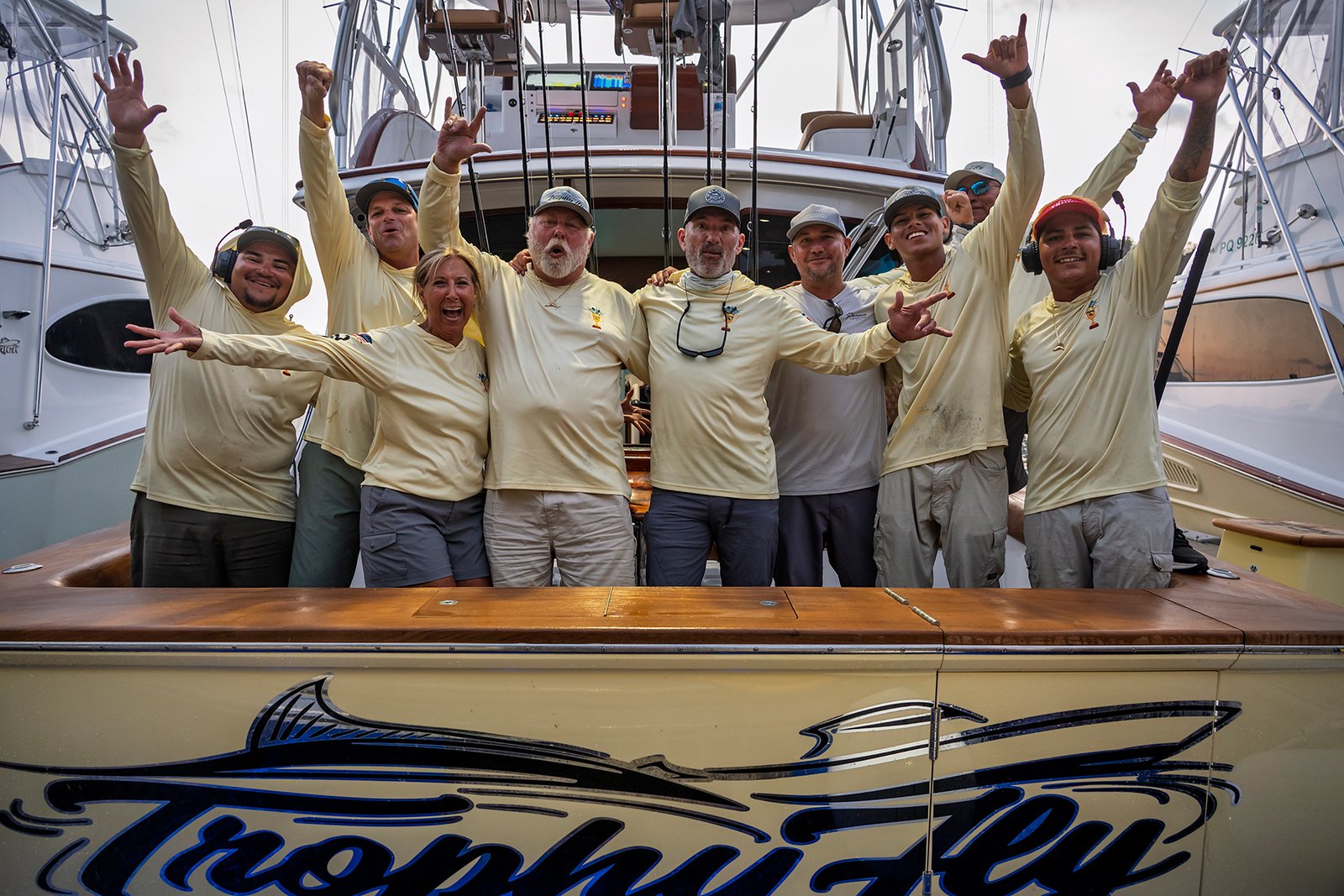
Team Trophy Fly
Quepos: Marina Pez Vela
Quepos sits about 40 miles south of Herradura, on the far side of Manuel Antonio National Park. Marina Pez Vela has grown into the region's tournament engine, and its events are generally open — you do not need a slip, a membership, or an invitation to enter most of them.
Pelagic Rockstar Offshore Tournament
The season opener and the largest and richest tournament in Central America. The 2026 tenth-anniversary edition drew 117 boats and 659 anglers from 14 countries and paid out close to $2.93 million. Year eleven runs January 14–17, 2027.
Two fishing days, a 50-mile boundary from the Marina Pez Vela buoy, and rules deliberately looser than the Triple Crown's — crew may hook the fish and pass the rod once, which makes it accessible to anglers who have never fished a competitive event. Sonar and non-sonar boats compete separately for general-entry billfish money, so a conventional boat is not fishing against an omni-equipped program. Back on shore, the marina turns into a festival with live music every night, open to the public.
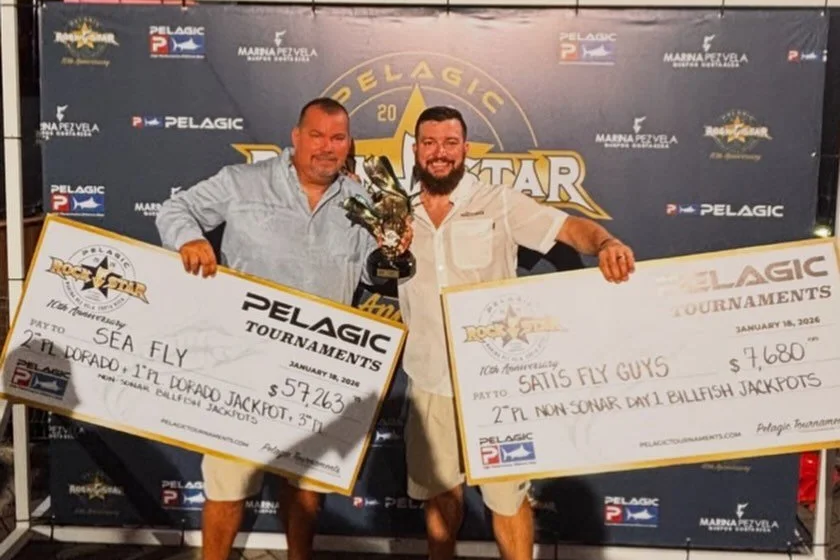
Team Sea Fly and Team Satis Fly both with wins in 2026
If you want one tournament that combines serious money with a genuinely welcoming format, this is it. It is also the hardest to get a boat for. Ours sold out for 2027 well before the season.
Pescadora Billfish Championship
February 18–20, 2027. The Pescadora is the world's leading all-women billfish tournament, founded in Quepos and built specifically for anglers across every experience level. Two fishing days out of Marina Pez Vela, with awards split between Hook and Hand and Hook Your Own divisions under IGFA release rules, plus overall team awards.
The two-division structure is what makes it work: a first-time angler can compete legitimately in the same event as a seasoned angler without the format being a formality. Social events run alongside the fishing, and a portion of proceeds goes to Costa Rican community organizations each year.
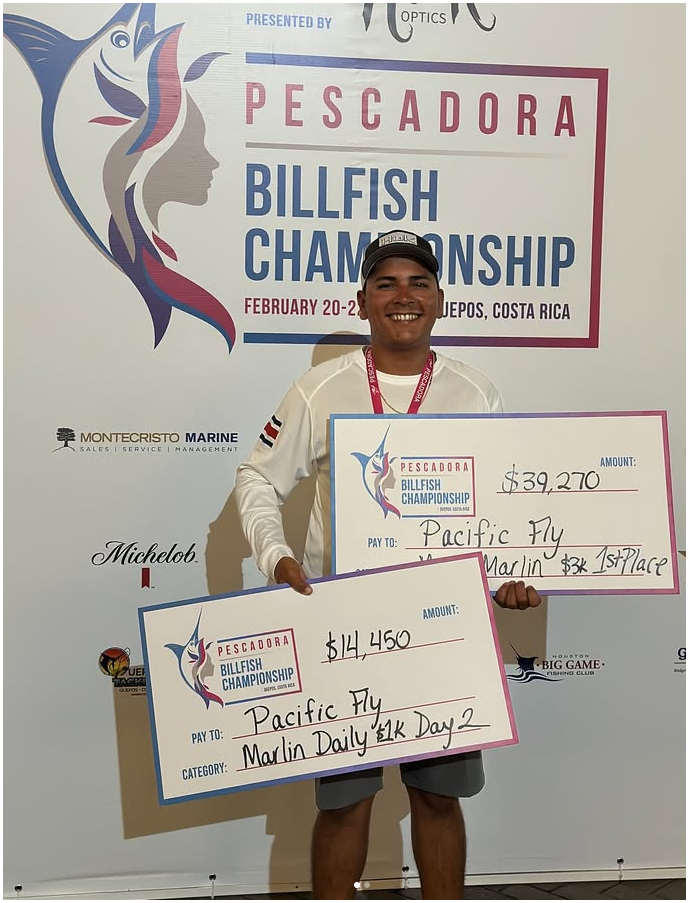
Pacific Fly
Bisbee's Costa Rica Offshore
April 6–10, 2027. Bisbee's brought its tournament series outside Mexico for the first time in 2026, and the debut in Quepos was a HUGE success: 79 boats and just over $2.155 million in payouts. The format carries the Bisbee's DNA — layered jackpot categories, including marlin-only, tuna, dorado and overall daily release jackpots, over three fishing days. Expect the 2027 field to be larger.
Offshore World Championship
Held each April, the OWC is the closest thing the sport has to a world championship. It has drawn teams from more than 70 nations across its history, operates under strict IGFA rules with video verification of releases, and awards a championship ring rather than a cash purse.
The format changed significantly in 2026. Teams now bring their own boat, private or chartered, instead of drawing boats at random each morning, and the field expanded beyond qualifying-event winners to include open-entry Challenger teams. The 2026 edition ran April 19–23 with 1,167 billfish released. Boats depart from several Costa Rican marinas, with weigh-ins and festivities at Marina Pez Vela.
The Shorter Events
Not every tournament requires a week and a five-figure commitment. The Rooster Rodeo and the Sailfish Slam are single-day events run by Marina Pez Vela with modest entry fees, competitive fields, and a strong social element. The Club Amateur de Pesca International Sailfish and Marlin Tournament is one of the country's oldest events and carries a distinctly Costa Rican character. The IGFA Open runs under full international rules for anglers who want that standard without a championship-level purse.
These are the right entry point if you have never fished a tournament and want to see how the format feels before committing to Rockstar or Bisbee's.
How to Fish One as a Visiting Angler
You have two paths.
Bring your own boat. Realistic only if you already own a program or are prepared to ship your boat to Costa Rica and back. Marina and space fills up fast, so plan early!
Charter. This is how the large majority of visiting teams fish the tournaments, and it removes essentially every logistical problem. You are getting a boat that already lives here, a captain who fishes these waters 200 days a year, and a crew that knows the tournament format.
What a tournament charter typically covers: the boat and crew for the fishing days, fuel, bait, tackle, ice, food and drinks aboard, and coordination with the tournament office on registration and observer logistics. What it does not cover: tournament entry fees and optional jackpots, which are paid to the organizer directly, plus lodging, transfers, and anything you add onshore.
Book early. This is not a sales line, it is how the calendar works. Rockstar boats go first, usually a full year out. Triple Crown legs fill on a similar cycle because the eligible fleet is capped by slip count. April events — Bisbee's and the OWC — book heavily from September onward. For 2027, our Rockstar boats are already sold out; we have limited availability remaining for the Pescadora and Bisbee's Costa Rica.
Build the team first, then the boat. Most events run four to six anglers. Decide who is fishing, whether anyone needs the hook-your-own format, and what your appetite is for the jackpot structure. That determines which tournament suits you, which determines the boat.
Rules, Conservation, and What Gets Counted
Costa Rican law requires the release of sailfish and marlin taken on sport tackle, so every major tournament here is a release event by default. That has shaped the competitive culture: crews are judged on releases, not on dead weight at the scale, and tuna and dorado jackpots are the only weighed categories at most events.
Practical implications for a first-time competitor:
Circle hooks and release standards. Expect requirements around hook type and handling. Observers or video verification enforce them.
Hook-your-own versus hook-and-hand. The Triple Crown and the OWC require the angler to hook the fish. Rockstar & the Bisbees allows one crew hookup and pass. The Pescadora scores both separately. This single rule difference makes all the difference on a competitive playing feild.
Boundaries. Both host marinas impose a 50-mile fishing radius. Your captain will already know the productive water inside it.
Scorecards and deadlines. Releases are radioed in and confirmed on a scorecard with a hard nightly deadline. Missing it costs points that were already earned.
Tournaments here also fund real conservation work. Gray FishTag Research is a longstanding Triple Crown partner, tagging fish during competition, and the Los Sueños Foundation for Schools and Building Smiles have both been supported by tournament anglers.
Planning the Trip Around a Tournament
Getting here. Fly into San José (SJO). Los Sueños is roughly a 90-minute drive or a 25 minute helicoptor ride; Quepos is about three hours, or a short domestic flight into Quepos La Managua. Arrange transfers in advance — tournament weeks strain local ground transportation.
Where to stay. At Los Sueños, the resort's villas and condominiums put you inside the gates and a few minutes from the dock, which matters when observer check-in starts at 4:50 a.m. In Quepos, lodging spreads between the new condos at the marina and local hotels towards Manuel Antonio.
How long to stay. Add at least one day before the captains' meeting and one after the awards dinner. Tournament days are long, and travel days stacked against them are where problems happen.
If you are not competing. Tournament weeks are worth attending anyway. Boat parades out of the marina, dock scenes at weigh-in, live music at Rockstar, and awards nights are all open or semi-open. Non-competing partners and guests are well catered for at both marinas, and Manuel Antonio National Park is 20 minutes from Marina Pez Vela.
Frequently Asked Questions
When is tournament season in Costa Rica? January through April, with the heaviest concentration of events between mid-January and mid-March. This overlaps with peak billfish season and the driest, most stable weather of the year.
Can anyone enter a Costa Rica fishing tournament? Most Quepos events are open entry, including Rockstar, Bisbee's, the Pescadora for women's teams, and the shorter marina-run events. The Los Sueños Triple Crown is restricted to boats holding a slip at Safe Harbor Los Sueños, so you would need to fish aboard a resident boat.
Do I need tournament experience? No. Rockstar, the Pescadora, the Rooster Rodeo, and the Sailfish Slam are all formats that accommodate first-timers. A crew that fishes these events regularly will walk you through the rules before lines in.
What do I actually catch? Sailfish in volume, with blue, black, and striped marlin as the high-value targets. Yellowfin tuna and dorado are in the same water and count in weighed jackpot categories at most events.
How far in advance should I book? Twelve months for the January events, six to nine months for February and March, and by early fall for the April tournaments. Boats sell out before entries close.
Fishing a Tournament With Maverick
Our fleet is based at Los Sueños and fishes the Triple Crown every season, and we run boats to Quepos for the major events there. Our captains have fished these tournaments for years — several have been competing on this coast since the 1990s — and our boats are set up for competitive fishing rather than converted for it.
For the 2027 season, our Pelagic Rockstar boats are sold out. We have limited availability remaining for the Pescadora Billfish Championship (February 18–20) and Bisbee's Costa Rica Offshore (April 6–10).
If you are considering either, or want to talk through which event fits your team, get in touch and we will walk you through the options.